Brae Rural Energy Hub Opens As Flagship Innovate UK Demonstrator For Rural Decarbonisation
New community hub in Shetland marks major milestone for Rural Energy Hubs project, testing a replicable model for net zero in rural areas.
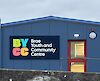
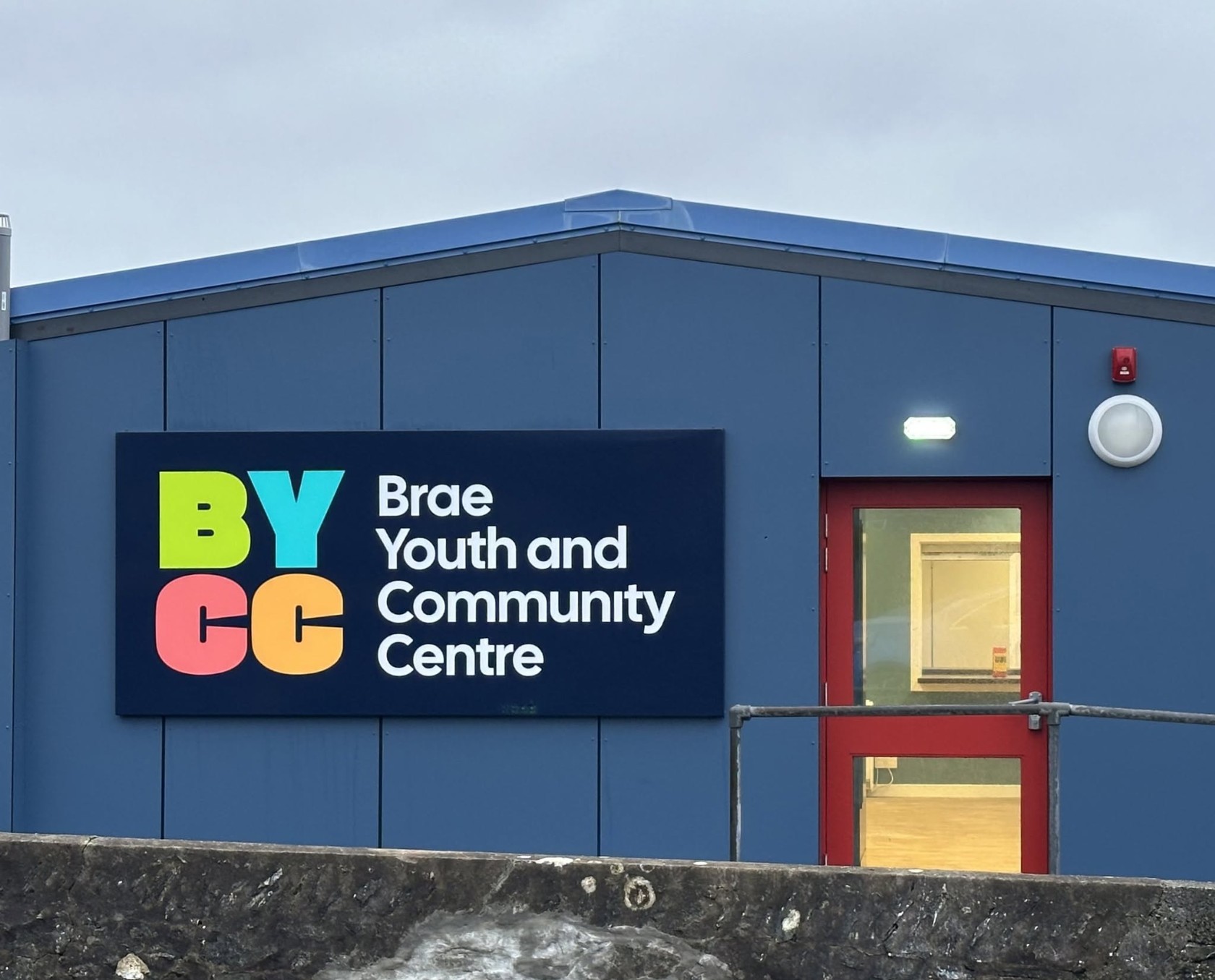
The Brae Rural Energy Hub officially opened on 14 November 2026 at Brae Youth and Community Centre (BYCC) in Shetland following completion of refurbishment works, funded by the Innovate UK supported Rural Energy Hubs project – a national initiative to test new, community led models for decarbonisation.
Operated by Brae Rural Energy Hub CIC, the Hub brings together under one roof practical support on home energy, low carbon transport and flexible workspaces. The aim is to understand how integrated, community anchored “energy hubs” can accelerate the transition to net zero in dispersed, rural settings – and to generate learning that can be replicated in villages and rural communities across the UK. The Hub is collocated with a new community cafe, within the Brae Youth and Community centre – which has been retrofitted by the project to function as a warm, welcoming, multi-use centre that will draw people in for different purposes and they can learn about and use the decarbonisation facilities.
The Brae Rural Energy Hub will:
Provide free, impartial home energy advice from certified expert staff to help households in Shetland reduce bills and emissions
Offer information and signposting for businesses seeking to improve energy efficiency and cut operating costs
Host an EV charge point in Brae, supporting the shift to electric vehicles in island and rural contexts
Host one of the Shetland Car Club electric vehicles at the Hub, giving members access to shared, low carbon transport
Offer e-bike hire, enabling people to trial low carbon travel options
Provide co-working desks and meeting space, supporting more local, flexible working in Brae
Maintain a welcoming, multi-use community space in partnership with BYCC
A testbed for new rural decarbonisation models
The Rural Energy Hubs project, initiated by Innovate UK, is exploring how place based hubs can integrate services such as energy advice, local charging infrastructure, shared transport and workspace within existing community assets to deliver faster, fairer decarbonisation in rural areas. The intention is that this model can be replicated around the country.
Brae is the first rural locations in the UK to put this model into practice. By embedding the Hub within an established community venue, the project is testing how trusted local organisations can act as long term anchors for net zero – reaching people who are often missed by traditional, urban centric approaches to decarbonisation.
Bob Clark, Director of Brae Rural Energy Hub CIC, said:
“Rural and island communities like Shetland face some of the toughest challenges when it comes to the energy transition – from higher transport and heating costs to limited local infrastructure”.
“By opening the Brae Rural Energy Hub at the heart of an existing community centre, we are showing how decarbonisation can be made practical, affordable and locally owned. This is about testing, in real life, how a single hub can bring together the advice, facilities and spaces people need to make low carbon choices part of everyday life”.
Generating evidence for scale across the UK
As part of the Rural Energy Hubs project, the Brae Hub will generate detailed evidence on how people use the services on offer, the impact on energy use, travel behaviour and local economic activity, and what mix of services works best in a rural context.
The Rural Energy Hubs Project involved multiple decarbonisation initiatives in Shetland and Orkney, the creation of the Brae Rural Energy hub is the flagship. The project was led by Orkney based environmental consultancy Aquatera and delivered with partners Shetland Islands Council, Community Energy Scotland, the European Marine Energy Centre (EMEC) and Orkney Islands Council. Alongside the creation of the Brae Hub, the project team created a replication framework and are actively seeking opportunities to replicate Hubs elsewhere to create a network of Rural Energy Hubs. Insights from Brae will feed into this work and inform place-based decarbonisation, policy, investment and future delivery models for rural communities across the UK.
Ian Johnson, REH Project Director and Aquatera Director, said:
“The opening of the Brae Rural Energy Hub is a significant milestone for the Rural Energy Hubs concept and for the UK’s wider net zero journey”.
“It demonstrates how existing community assets can be transformed into locally governed ‘energy hubs’ that bring together advice, infrastructure and services in a way that works for rural communities. The learning from Brae will help shape how we design and establish similar models in other rural and island settings across the country. In recent weeks since it started operation, alongside Cari’s Cafe and the Youth Centre, it has been fantastic to see this vision coming to life, with people stopping to get a coffee, use the co-working space, and chat with the Hub staff to get energy advice. It’s a relaxed community atmosphere, providing multiple tools to individuals and the community to reduce their carbon emissions and their energy bills.”
Community partnership at the centre
The Hub builds on the long-standing role of Brae Youth and Community Centre as a focal point for local life. The project funded a significant retrofit of the old building, which was cold and damp, including insultation, new heating, a redesign of internal layout to make room for co-working space and cafe, the addition of solar and batteries, EV charging, e-bikes – both to improve energy efficiency and to act as a demonstration of decarbonisation technologies. The development of the new Hub services has been shaped through engagement with local residents, businesses and community organisations to ensure the offer reflects how people in Shetland live and work.
Adrian Henry, Chair of BYCC Committee, said:
“This partnership between the Hub and BYCC shows what is possible when national innovation funding is combined with local knowledge and commitment”.
“Our committee is entirely made up of volunteers and it has been a challenging and learning experience for us to work with the project team on this – first workshopping ideas for what the building and community needed and then working with them and the construction subcontractors through the renovation. But the improvement to the building and the new services of the Rural Energy Hub and Cari’s Cafe, will make a big difference to the community. By adding specialist energy and low carbon services and a cafe to an established, much loved community space, we are creating a warm, inviting, practical model for rural decarbonisation that starts from what communities already have – and then builds from there”.
The retrofit of the BYCC and concept for the Brae Rural Energy Hub was first established through the Innovate UK project from February 2024 to February 2026. The Brae Rural Energy Hub is now fully run by a local board with ongoing staffing who have secured funding for a four-year operational demonstration project from 2025 to 2029 funded by Shetland Community Benefit Fund and the Coastal Communities Fund.
The set up of the Brae Rural Energy Hub and the retrofit of the BYCC building was led by Rural Energy Hubs project partner Shetland Islands Council.
Claire Ferguson, Executive Manager Future Energy and Climate, Shetland Islands Council, said:
“It's fantastic to see the opening of the Brae Rural Energy Hub and the transformation that's taken place. The building has been extensively refurbished including new insulation and renewable energy generation. The space can now be used more flexibly, with an array of services, and we're excited to see people coming through the doors.”
Project Partner Community Energy Scotland played a key role in the development of the Brae Hub and the Hub is also acting as the Shetland location for their Islands Community Action Network (ICAN) network.
Mark Hull, Technical Director, Community Energy Scotland, said:
“A key insight from developing the Hub in Brae is that local people are the experts you need to work with to develop and implement effective renewable energy and decarbonisation programmes in rural and island communities. They know the skills and resources, the challenges and limitations of their area and are essential to creating a project that can identify, understand and overcome barriers. Local ownership is also essential to long-term success and the setup of the Brae Hub, with its own local staff and board, aims to act as a galvanising point for volunteers, residents, community groups and businesses, events, and learning to support decarbonization in Shetland.“
People and organisations can find out more about the Brae Rural Energy Hub, its services and opportunities to collaborate through the Hub’s website and social media channels.
Stakeholders interested in the replication of Rural Energy Hubs, the Rural Energy Hubs project and its learning for rural net zero are encouraged to contact the project team for further information through project lead Aquatera.
Find out more about the Hub, its services and opening information at www.braeruralenergyhub.com and through the Hub’s social media channels and newsletter. Information on BYCC and Cari’s Café can be found on their social media channels as well as the Hub’s website.